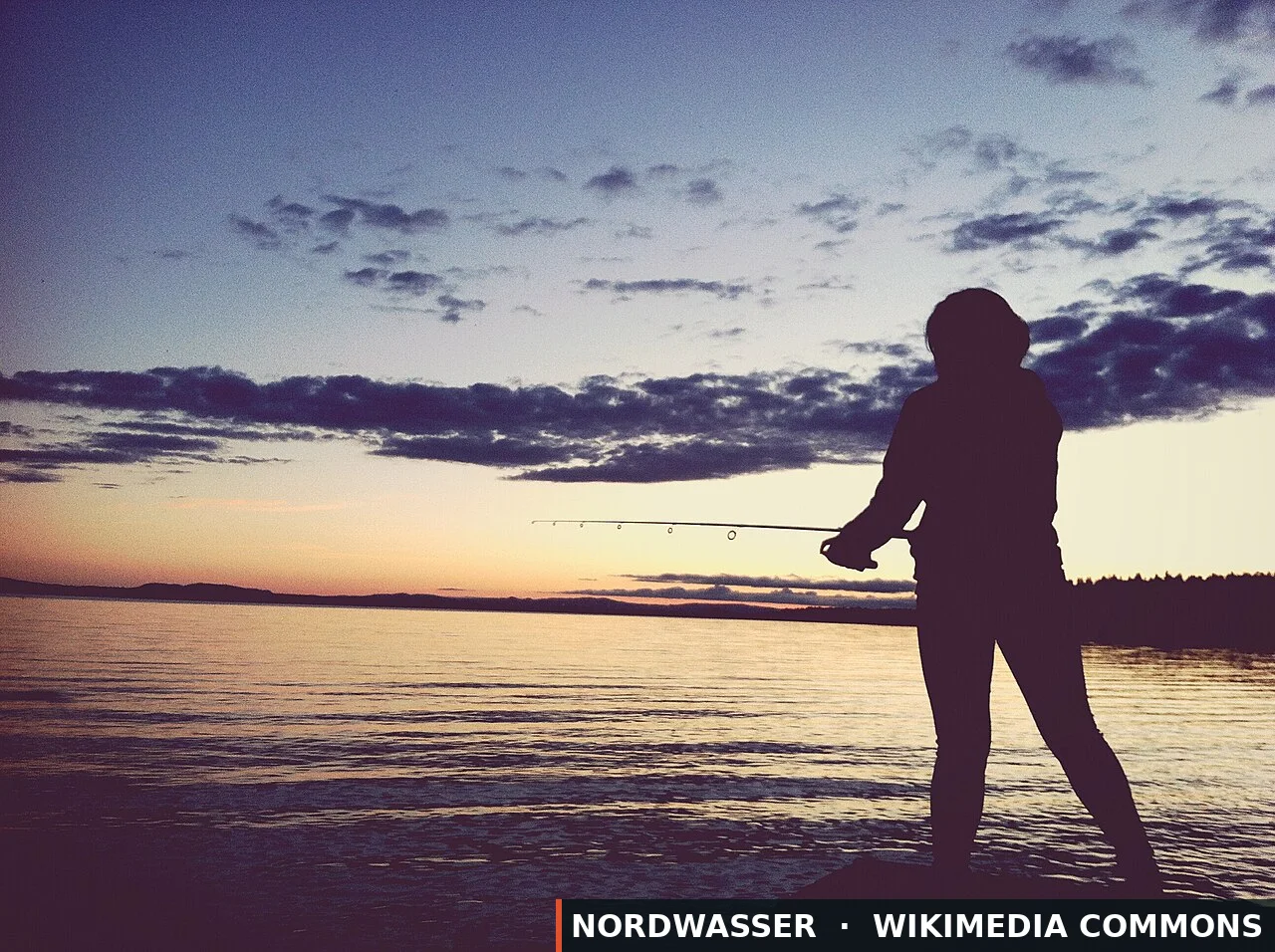
- Scientific name
- Abramis brama
- Swedish name
- Braxen
- Maximum length
- up to 80 cm
- Maximum weight
- up to 9 kg
- Spawning
- Mai–Juni im Flachen
- Swedish record
- Kapitale Fische über 6 kg
Technique in brief
Bottom fishing with a cage feeder or method feeder is the most effective method. The shoal must be attracted with feed and kept in place; without feed, the spot usually remains quiet. The most productive times are at night and in the early morning during the summer half of the year.
Tackle
A feeder rod of around 3.60 m with a casting weight of 60–100 g, hooks in sizes 10–14 and a cage feeder cover what is needed. Worms, maggots, maize and small boilies work as bait; the groundbait can be sweet and fine-grained.
Handling the catch
Bream have a thick layer of slime that protects them against infections. Place them on an unhooking mat, not on gravel or a jetty, wet your hands and release the fish promptly.
Season by country
- Jan Quiet
- Feb Quiet
- Mar Quiet
- Apr Good
- May Prime time
- Jun Prime time
- Jul Prime time
- Aug Prime time
- Sep Good
- Oct Good
- Nov Quiet
- Dec Quiet
Prime time · Good · Quiet
The calendar shows bite windows, not closed seasons. Binding closed seasons and minimum sizes are set by the individual water and appear on its page.
Where in Scandinavia
- Fishing for Bream in Sweden 342 waters
Official sources
Checked: 04.08.2026
Frequently asked questions
How do I recognise a good spot for bream?
By rising trails of bubbles over soft ground and cloudy, disturbed water in shallow bays — both are caused when the shoal roots for food in the mud.
When does bream bite best?
At night and in the early morning from May to August. It is best to put down feed the evening before.
Do you need a lot of feed when fishing for bream?
Yes, more than for most other species. A shoal quickly clears out a small feeding spot and then moves on.
.jpg?utm_source=nordwasser&utm_medium=referral)


