- Scientific name
- Salmo trutta
- Swedish name
- Öring
- Maximum length
- up to 110 cm
- Maximum weight
- up to 20 kg
- Spawning
- Oktober–Januar in strömendem Wasser
- Swedish record
- Meerforelle über 15 kg, Bachforelle deutlich kleiner
Technique in brief
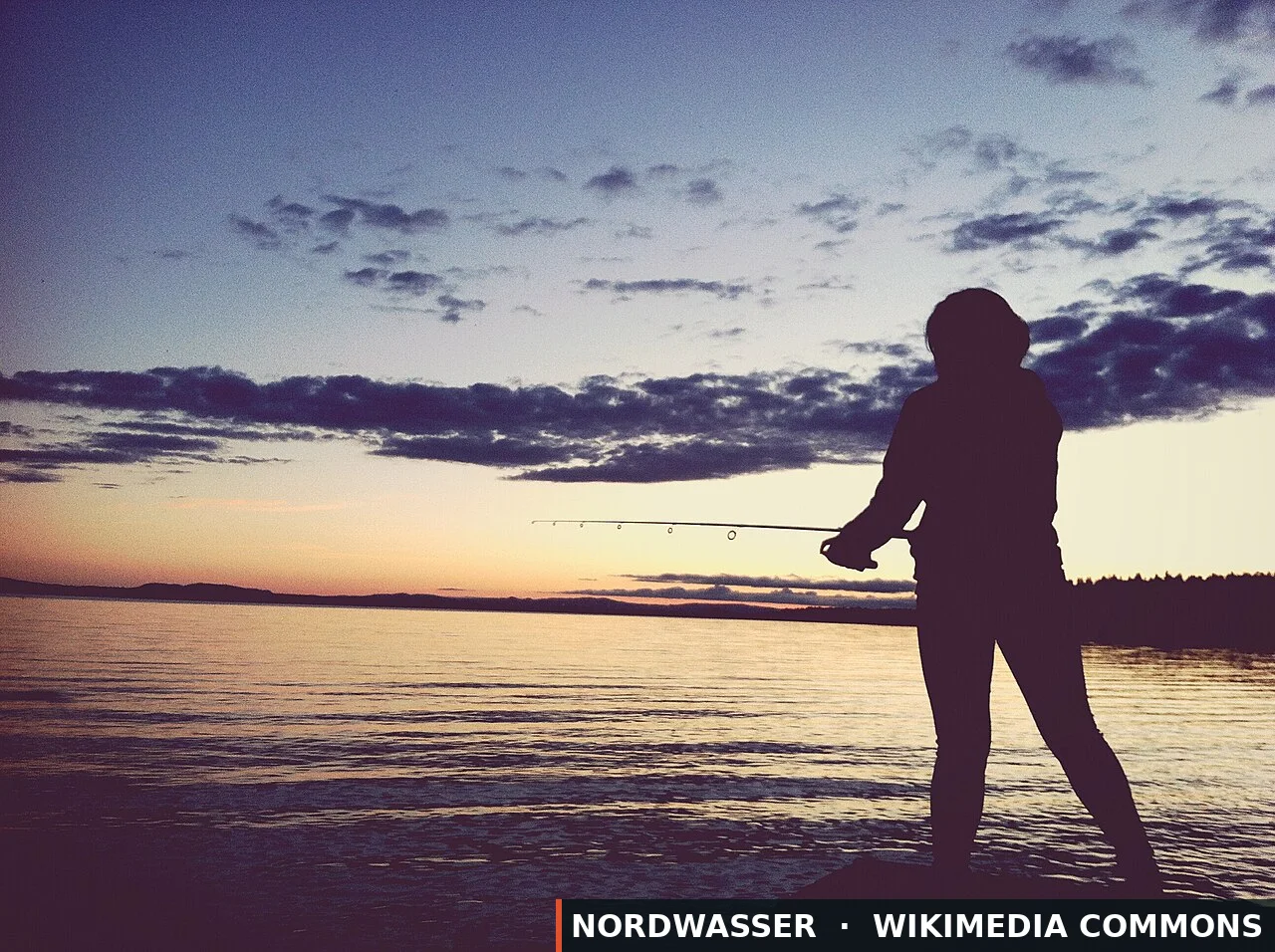
In streams and small rivers, they are caught with a short spinning rod, a small spinner or wobbler, and casts worked upstream. Trolling is the most efficient method for lake trout; on the coast, coastal spinning with a spoon or fly fishing in wadeable areas predominates. Cloudy, slightly raised water levels after rain often provide the best days.
Tackle
For a stream, a rod 1.80–2.40 m long with a casting weight of 3–15 g and monofilament line of around 0.20 mm is sufficient. On the coast, 2.70–3.00 m and 10–30 g are usual. For fly fishing, classes 5–7 cover almost everything from a small stream to the coast.
Handling the catch
Trout are sensitive to warm water and long fights. At water temperatures above 18 °C, you should keep the fight short or fish during the cooler periods at the beginning and end of the day. Barbless hooks and unhooking fish in the water significantly increase the survival rate.
Season by country
- Jan Quiet
- Feb Quiet
- Mar Quiet
- Apr Good
- May Prime time
- Jun Prime time
- Jul Good
- Aug Good
- Sep Good
- Oct Quiet
- Nov Quiet
- Dec Quiet
Prime time · Good · Quiet
The calendar shows bite windows, not closed seasons. Binding closed seasons and minimum sizes are set by the individual water and appear on its page.
Where in Scandinavia
- Fishing for Trout in Sweden 813 waters
Official sources
Checked: 04.08.2026
Frequently asked questions
Is there a closed season for trout in Sweden?
Yes, but there is no uniform nationwide closed season. Many running waters are closed in autumn during the spawning season; the exact dates are set by the County Administrative Board and the fishing rights holder and published on the water's page.
What is the difference between havsöring, insjööring and bäcköring?
They are the same species with three different ways of life: migrating between the coast and a river, migrating between a large lake and a tributary, or remaining resident in a stream. The coastal and lake forms grow considerably larger.
Which method works on the Swedish coast?
Coastal spinning with slender spoons and fly fishing while wading. Spring and autumn are the most productive times; in high summer, the fish move to cooler, deeper zones.
.jpg?utm_source=nordwasser&utm_medium=referral)


