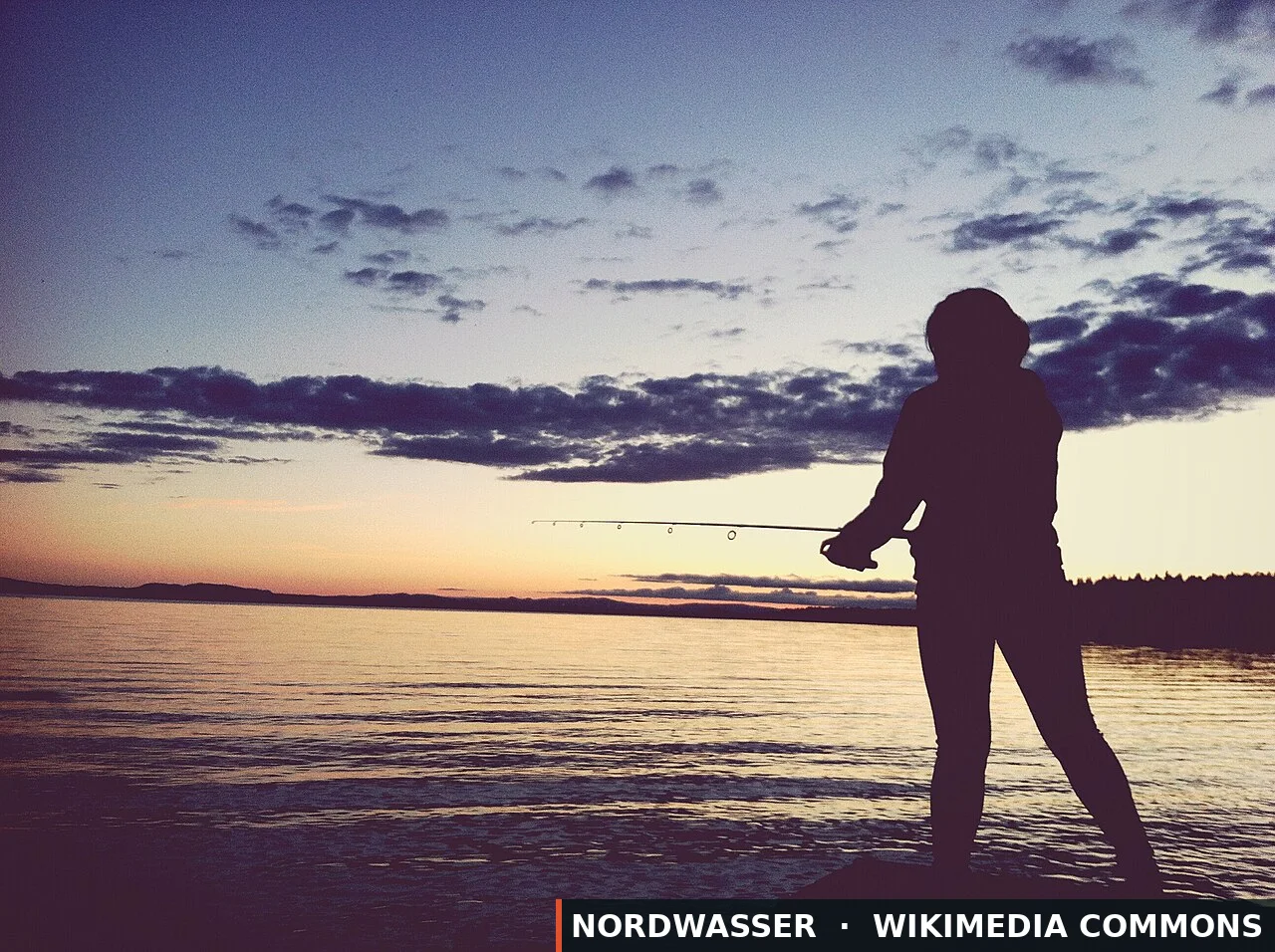
- Scientific name
- Leuciscus aspius
- Swedish name
- Asp
- Maximum length
- up to 120 cm
- Maximum weight
- up to 12 kg
- Spawning
- April–Mai ab etwa 6 °C in strömendem Wasser
- Swedish record
- Kapitale Fische über 8 kg
Technique in brief
Long-casting spinning rigs with slender spoons, poppers and shallow-running wobblers along current seams. The asp is wary and is quickly driven away by boat traffic and movement on the bank — distance and casting range are more important than lure details. Before every attempt, however, you must first check whether the water permits fishing for the species at all.
Tackle
A long spinning rod of at least 2.70 m with a casting weight of 15–50 g for maximum casting range, thin braided line and a fluorocarbon leader. A large landing net is essential because the fish are long and very active during the fight.
Handling the catch
As the species is protected in many places, careful handling is not optional. Unhook fish in the water, support them horizontally and release them without delay. Barbless hooks make this considerably easier.
Season by country
- Jan Quiet
- Feb Quiet
- Mar Quiet
- Apr Quiet
- May Good
- Jun Prime time
- Jul Prime time
- Aug Prime time
- Sep Good
- Oct Quiet
- Nov Quiet
- Dec Quiet
Prime time · Good · Quiet
The calendar shows bite windows, not closed seasons. Binding closed seasons and minimum sizes are set by the individual water and appear on its page.
Where in Scandinavia
- Fishing for Asp in Sweden 49 waters
Official sources
Checked: 04.08.2026
Frequently asked questions
Are you permitted to fish for asp in Sweden?
Not everywhere. The species is near threatened and protected in many waters and stretches of river. There is no nationwide prohibition, but unless the water expressly permits it, you should not deliberately fish for asp.
Where does the asp occur in Sweden?
Primarily in Mälaren, Vänern, Göta älv and Fyrisån, as well as in other large lakes and rivers in central Sweden.
How do you catch asp?
With long-cast, fast-retrieved spoons and surface lures along current seams — provided that the water permits targeted fishing for the species.
.jpg?utm_source=nordwasser&utm_medium=referral)

.jpg?utm_source=nordwasser&utm_medium=referral)
.jpg?utm_source=nordwasser&utm_medium=referral)