Show the full source description
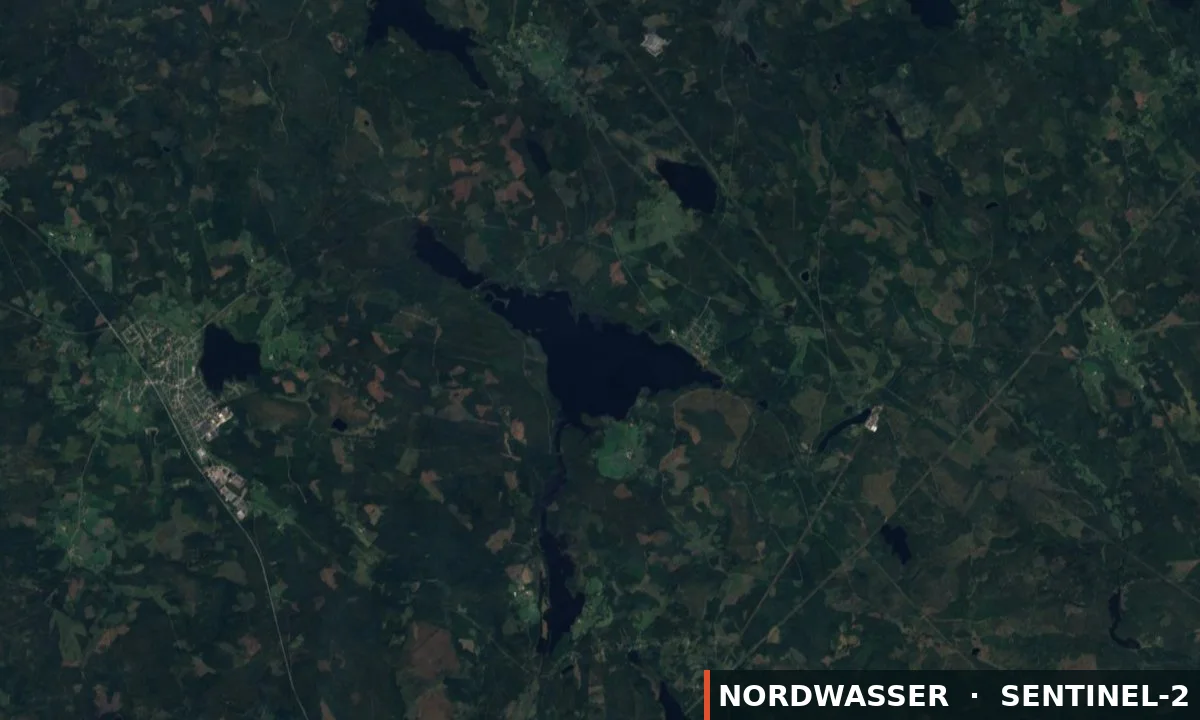
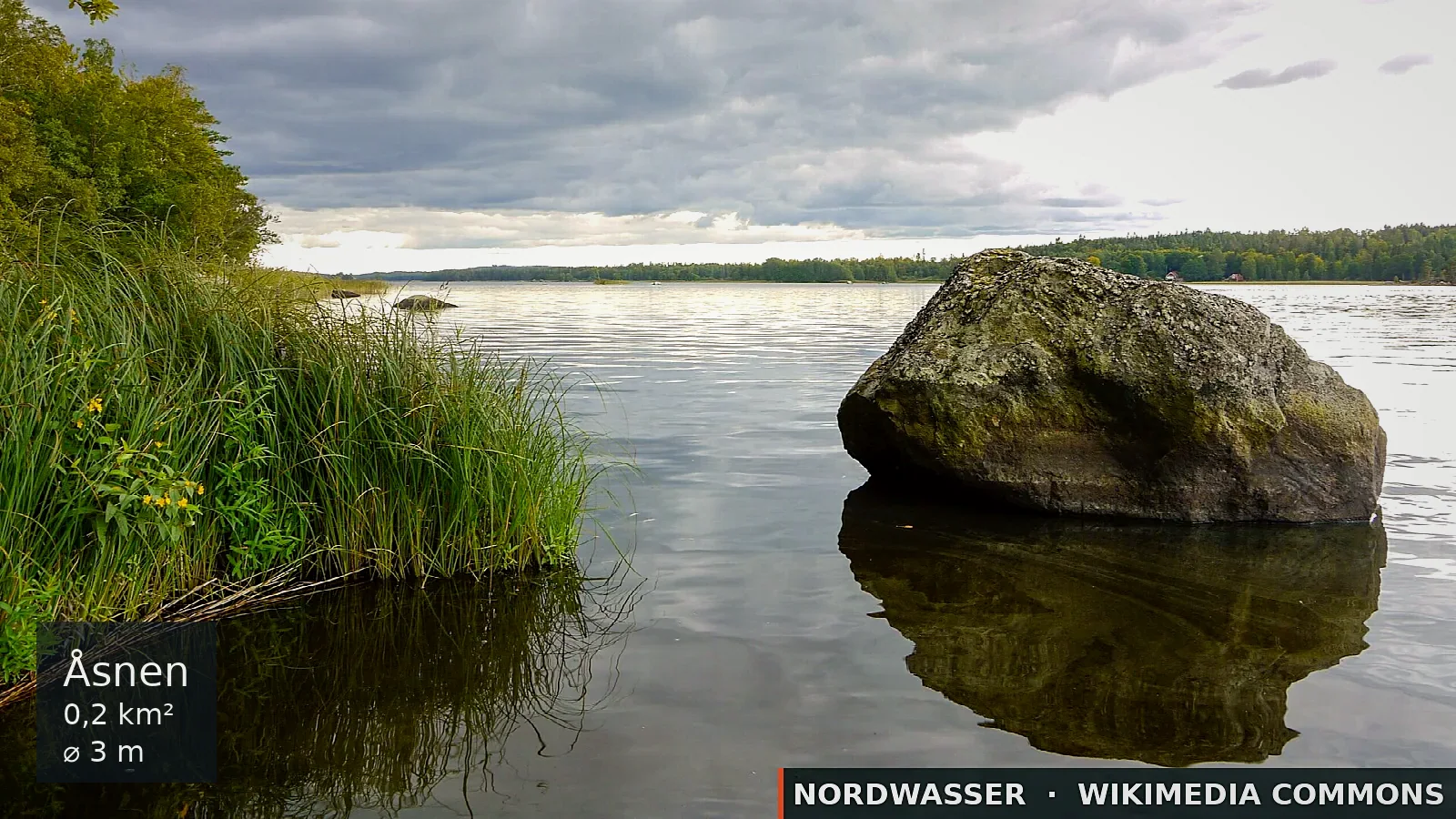
Welcome to Åsnen, a fishing paradise with 15.000 ha of water and 740 km of shoreline!Åsnen is one of the largest fishing lakes in southern Sweden. The lake has many islands, fjords and bays, providing diversity and variation.In the lake you can catch, for example, pike, perch, zander and eel. Åsnen has a rich fish fauna. In the 1999 survey fishing, the following 14 fish species were recorded; roach, rudd, perch, vendace, bream, tench, pike, smelt, silver bream, gudgeon, zander, bleak, ruffe and whitefish. According to older survey fishing and oral information, ide, minnow, bullhead, carp, trout and catfish have also been found in the lake.The availability of pike in Åsnen is assessed as very good. Survey fishing showed a very abundant stock of perch in Julöfjorden, Kalvsviksfjorden and Jätafjorden. In Skatelövsfjorden and Kolsvatten, availability was assessed as good, while it was less good in Horgefjorden. During the last ten years, zander has increased greatly and the lake has become very attractive for its fine zander fishing.The average depth is the sum of measured depth values divided by the number of measured depth values and is usually approximately 1/3 of the maximum depth. Åsnen is very shallow and its average depth is 3,1 m. Åsnen's maximum depth is 14,2 metres, but the deep areas are small in extent.Åsnen is a moderately nutrient-rich lake. The water supplied to the lake, primarily from the main inflow from Salen but also via Aggån, is nutrient-rich, with high levels of total nitrogen and total phosphorus. The water leaving Åsnen via the outlet at Hackekvarn is less nutrient-rich. Lakes act as traps for nutrients, and it is evident that a large proportion of the nutrients supplied remain in the lake, both bound in the sediments and taken up in the lake's food chain.The soil types in the Åsnen area are mainly moraine, and the terrain around the lake is largely flat. The lake is mostly surrounded by forest land. At the lake's northern bays there are grazed shore meadows and flooded wetland areas. On the lake's islands (960), as well as in Åsnen's south-eastern part, there is a considerable amount of decididuous forest.The lake is very indented with many bays, as it consists of a number of rock basins which together form a lake. Its shoreline, mainland and islands combined, is as much as 74 Swedish miles. The lake's surrounding shores are dominated by stony and boulder-strewn ground with coniferous and deciduous forest. Vegetation along the shore consists of shrubs, dwarf shrubs, grasses and herbs. More open shore areas occur near settlements and in agriculturally intensive areas in the lake's northern fjords.Åsnen has a flat bottom topography and, over large parts, a very stony and boulder-strewn bottom with many skerries and shallows. Most stones and boulders are found in the southern parts of the lake, which can be seen on the older steamboat map of the lake. (The map is included as an appendix to the fisheries conservation plan.)Vegetation in Åsnen is generally moderate, found in the lake's shallow fjords and dominated by common reed, bulrush and water lilies.Help us in our work against WATER PRIMROSE! Free fishing for children and young people up to and including the age of 15. Åsnens fisheries conservation area association manages fishing in Åsnens fisheries conservation area in the parishes of Skatelöv and Västra Torsås in Alvesta municipality, the parishes of Jät and Kalvsvik in Växjö municipality and the parishes of Almundsryd, Urshult and Väckelsång in Tingsryd municipality, Kronoberg County.The fisheries conservation area is divided into three management areas (Northern, Southern, Eastern), and the association's activities must cover all fishing within the area.The association's purpose is to coordinate the conduct of fishing and fisheries conservation, to promote the common interests of fishing-rights holders with regard to the provisions applying to the conduct of fishing, and to make fishing available to the public.Ever since the management of fishing in Åsnen was organised, fisheries conservation measures have largely consisted of fish stocking. Stocking was particularly intensive during the period 1930 - 1980, when the lake's fisheries conservation associations primarily stocked large quantities of eel and pike fry in the lake. However, stocking of vendace, whitefish, tench, trout and signal crayfish has also occurred over the years. During the most recent 20-year period, the stocking programme has exclusively covered zander, eel, mirror carp, trout and signal crayfish. In 2014, the association issued a navigation map of the lake and in the coming years will also measure the depths of Åsnen and then produce a very good fishing and boating map.